



Horse racing betting requires more than choosing the fastest-looking runner or following the shortest market price. At J88, bettors can assess recent form, class, distance, track conditions, pace, draw position, jockey statistics, and available wager types before making selections. This guide explains a repeatable process for analyzing races, comparing odds, and reviewing long-term results with greater discipline.
How to read a horse race before looking at the odds
Effective Horse racing betting begins with independent race analysis before market prices influence judgment. Ji88 Bettors should evaluate runners, conditions, expected pace, and human performance factors first.
Recent form and class level
Recent finishing positions provide useful information, but they should be interpreted alongside the quality of competition and circumstances of each race. In Horse racing betting, a horse dropping from stronger company may have a better chance than a recent winner moving sharply up in class. Bettors should examine margins, speed figures, trouble during running, race strength, and whether previous performances were improving or declining.
Distance, track surface and going conditions
A horse’s previous performances under similar race conditions can be more informative than its overall win percentage. Strong Horse racing betting analysis considers whether the runner is suited to the scheduled distance, dirt, turf, or synthetic surface, and current going conditions. Some horses perform best on firm ground, while others improve significantly on soft or heavy tracks. Pedigree, running style, and historical results can provide additional context when a horse faces unfamiliar conditions. Bettors should avoid assuming that success over one distance or surface will automatically transfer to a substantially different racing environment.
Horse racing betting depends on distance, surface, and track conditions
Draw position, pace and expected race shape
The importance of the starting draw depends on the course layout, race distance, field size, and individual running styles. A practical Horse betting approach also maps the expected pace by identifying likely leaders, pressers, midfield runners, and closers. A race containing several aggressive front-runners may create a fast early tempo that benefits horses finishing strongly from behind. Conversely, an uncontested leader may conserve energy and become difficult to catch.
Jockey and trainer performance indicators
Jockey and trainer statistics can provide context about preparation, tactical execution, and stable performance. In Horse racing betting, useful indicators include recent strike rates, results at the specific course, performance with particular horse types, and the historical record of jockey-trainer combinations. Strong percentages should not be evaluated in isolation because sample size, quality of runners, and market expectations affect interpretation. A leading trainer may have a low-priced runner with little betting value, while an improving stable can be overlooked. Bettors should use human performance indicators as supporting evidence rather than treating reputation alone as sufficient reason for selection.
Horse racing bet types from simple picks to exotic wagers
Understanding available wagers is an essential part of Horse racing betting because each category creates different winning conditions, payout potential, and variance. At J88, bettors should choose bet types that match their analysis, bankroll limits, and tolerance for risk rather than selecting complex wagers only because they advertise larger returns.
Straight bets
- Win: The selected horse must finish first. This is the simplest wager for bettors who believe one runner has the strongest chance of winning the race.
Place-based bets
- Place: The horse must finish within the qualifying place positions. The number of paid positions can depend on local rules, field size, and market conditions.
- Show: Common in North American racing, this wager wins when the selected horse finishes first, second, or third, subject to the operator’s settlement rules.
- Each-Way: The stake is divided into two parts: one wager on the horse to win and another on the horse to place. Place terms depend on the race and sportsbook conditions.
Multiple-horse bets
- Exacta: Bettors select the horses that will finish first and second in the correct order. Boxing combinations increases coverage but also increases the total cost of the wager.
Exotic bets
- Trifecta: The first three finishers must be predicted in the correct order. The additional outcome requirement generally creates higher variance than simple Win or Place bets.
- Superfecta: Bettors must identify the first four finishers in the correct sequence. The difficulty can produce large payouts, but covering multiple combinations may require significantly higher total stakes.
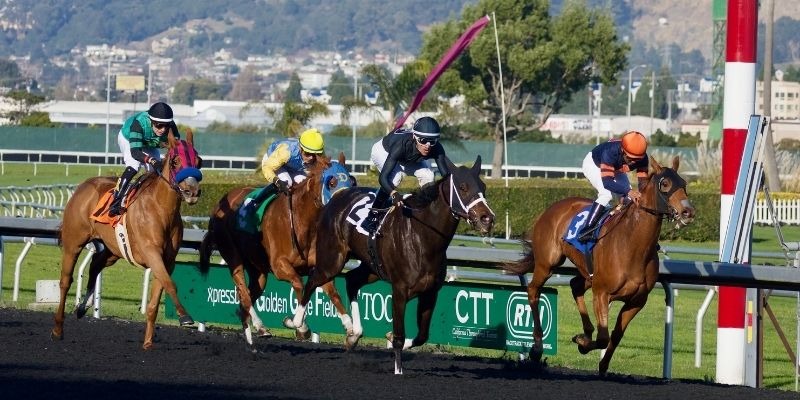
Horse racing wagers vary in risk and complexity
Creating a repeatable process for horse racing betting
A disciplined Horse racing betting process separates race analysis, probability estimation, price comparison, and performance review into repeatable stages. At J88, following the same evaluation framework across many races can reduce impulsive selections and make it easier to identify strengths, weaknesses, and recurring analytical errors.
Build a shortlist before checking market prices
Creating a shortlist before viewing odds can reduce the influence of market favorites and popular narratives. A structured Horse racing betting process begins by reviewing form, class, conditions, pace, draw, and relevant jockey or trainer indicators. Bettors can eliminate runners with significant disadvantages and identify several contenders that fit the expected race shape. At J88, the shortlist should remain flexible because late scratches, weather changes, or updated track conditions may alter the analysis. The objective is not to predict the winner immediately but to establish an independent assessment before market prices influence the perceived strength of each runner.
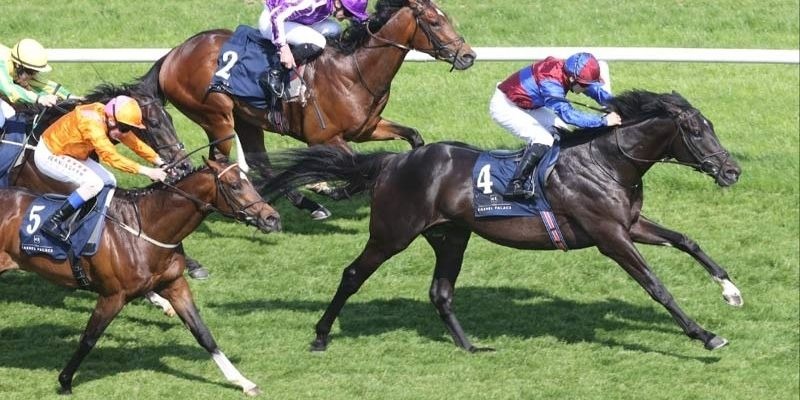
Building a shortlist helps evaluate horses before checking odds
Compare your estimated chances with available odds
After identifying contenders, bettors should assign realistic probability estimates and compare them with the market prices. Effective Horse racing betting requires distinguishing between the horse most likely to win and the horse offering an attractive price relative to its estimated chance. A runner assessed at a 25% probability has fair decimal odds of 4.00 before accounting for margin. If the available price is significantly higher, further evaluation may be justified; if it is much lower, the selection may offer poor value. Probability estimates are uncertain, so bettors should require meaningful differences rather than acting on minor pricing discrepancies.
Record selections and review results over a large sample
Detailed record keeping allows bettors to evaluate whether their process performs consistently over time. A serious Horse racing betting log should include race conditions, selections, estimated probabilities, market odds, stake sizes, bet types, results, and reasons for each decision. At J88, players can review performance by track, distance, race class, wager category, and price range to identify patterns. Large samples are more informative than several winning or losing races because short-term outcomes contain substantial variance. Reviewing the quality of decisions, not only financial results, can reveal whether adjustments to analysis or staking rules are justified.
Conclusion
Successful Horse racing betting analysis requires evaluating form, class, distance, track conditions, draw position, pace, and jockey or trainer indicators before comparing market prices. Bettors should understand how straight, place-based, multiple-horse, and exotic wagers create different risk profiles and settlement conditions. By building independent shortlists, estimating probabilities, tracking results, and reviewing race information at Xổ Số J88 , players can approach with greater structure, stronger price awareness, and more disciplined long-term decision-making.
