


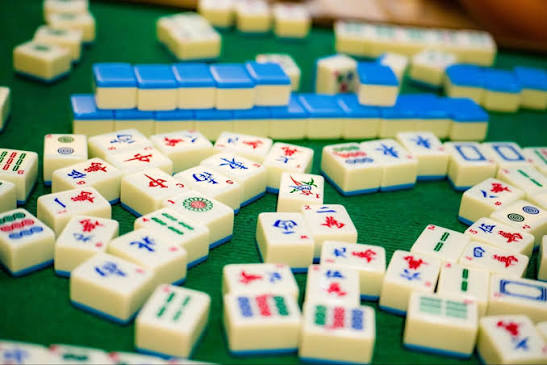
Mahjong has undergone significant changes as digital technology has become part of everyday entertainment. Originally recognized as a traditional tile-based game, Mahjong has gradually entered digital environments through computer software, mobile applications, and interactive gaming platforms. This transformation has allowed developers to preserve familiar visual elements while introducing automated systems, dynamic interfaces, animations, and new forms of gameplay.
The modern digital interpretation of Mahjong can therefore be understood as a combination of traditional symbolism and contemporary software design. Although the appearance of tiles, dragons, characters, flowers, and other cultural elements may remain recognizable, the underlying mechanics can differ considerably from those used in traditional Mahjong.
The Digital Transformation of Mahjong
Traditional Mahjong relies on physical tiles, player interaction, and established combinations. Digital technology changes the way these components are presented. Software can automatically organize tiles, calculate scores, determine combinations, and manage game progression without requiring manual intervention.
The introduction of mobile devices has accelerated this development. Touchscreen controls allow users to interact directly with digital tiles, while responsive layouts make the games suitable for different screen sizes. Information that would normally require a physical rulebook can also be incorporated into menus, tutorials, and symbol descriptions.
Another major change involves visual presentation. Modern graphics engines allow developers to create detailed tile designs, animated backgrounds, particle effects, and responsive visual elements. These features can make the interface more dynamic while maintaining recognizable references to traditional Mahjong culture.
Understanding Mahjong Patterns
Patterns remain an important concept in Mahjong-inspired digital games. Traditional Mahjong involves identifying relationships between tiles and forming specific combinations. Digital adaptations may simplify these principles or replace them with alternative matching systems, depending on the game’s structure.
Some games use identical symbols as the basis for combinations, while others rely on sequences, clusters, or predefined arrangements. Special tiles can also have unique functions that distinguish them from ordinary symbols.
Because every digital title can use different rules, players should examine the individual game instructions rather than assume that a familiar symbol always has the same purpose. A dragon tile, for example, may function as an ordinary symbol in one title but become a special feature trigger in another.
Understanding the relationship between symbols is more useful than attempting to identify patterns solely from previous results. Game patterns are normally defined by programming and documented rules rather than by a sequence that can reliably predict future outcomes.
Randomization in Digital Gameplay
Randomization is a fundamental part of many modern digital games involving chance. Computer systems use programmed mathematical processes to determine outcomes, meaning that individual rounds are generally independent from one another.
This principle is important when evaluating claims about recurring patterns. A series of favorable outcomes does not necessarily indicate that another favorable outcome is due to occur. Likewise, several unsuccessful rounds do not automatically increase the probability of a particular result in the following round.
Historical data can provide information about what has already happened, but it should not be confused with a guaranteed prediction mechanism. Understanding this distinction allows players to evaluate digital gameplay based on documented mechanics instead of assumptions about unavoidable sequences.
Reel-Based Mahjong Formats
Digital development has also produced Mahjong-themed formats that combine traditional imagery with reel-based mechanics. Slot Mahjong is a commonly used term for games in this category, where Mahjong-inspired symbols are integrated into a system based on reels, symbol combinations, and automated outcomes.
Such games can feature Chinese characters, dragons, coins, flowers, traditional tile designs, and other visual references. However, their gameplay structure may have little connection with the complete rules of traditional Mahjong.
This distinction is useful when studying the genre. A Mahjong theme does not automatically mean that a digital game follows traditional Mahjong scoring or player interaction. The actual rules, symbol functions, and winning conditions determine how the particular title operates.
Special Features and Their Functions
Modern digital games can incorporate numerous features that are difficult to reproduce using physical tiles. These functions are programmed into the software and normally have clearly defined activation conditions.
Examples include wild symbols, multipliers, free rounds, expanding symbols, cascading combinations, and feature-triggering symbols. Some systems can modify the appearance or behavior of symbols when a particular condition is met.
Visual effects are frequently used to communicate these events. A special combination may trigger an animation, sound effect, or change in the surrounding interface. Although such effects influence the presentation, they should not automatically be interpreted as evidence of improved probability.
The most reliable way to understand a feature is to examine its documented rules. Information panels often explain how symbols interact, which combinations activate additional functions, and what conditions apply to specific features.
RTP and Volatility
For digital games that incorporate gambling-style mechanics, Return to Player, or RTP, is an important mathematical concept. RTP represents a theoretical long-term percentage associated with a game’s mathematical model. It does not indicate how much a particular player will receive during an individual session.
Volatility provides another way to describe the distribution of potential outcomes. Higher-volatility games may be structured around less frequent but potentially larger outcomes, whereas lower-volatility systems may distribute outcomes differently. These classifications describe mathematical characteristics rather than guaranteeing specific results.
Players should also distinguish statistical information from informal terminology found in online discussions. The phrase Slot Mahjong Gacor is often used casually to describe a title perceived as producing frequent favorable results. However, the term does not constitute a mathematical classification and should not be interpreted as proof that future outcomes can be predicted.
User Interface and Accessibility
The interface is an important part of modern Mahjong game design. Developers increasingly focus on clear navigation, readable symbols, responsive controls, and convenient access to game information.
On mobile devices, touchscreen interaction allows users to select tiles or interface controls directly. Larger buttons and simplified menus can make complex information easier to navigate. Desktop versions may provide additional screen space for displaying game statistics, rules, and symbol information.
Accessibility also involves information clarity. A well-designed interface should allow users to understand essential mechanics without relying entirely on visual effects. Symbol descriptions, game instructions, feature explanations, and settings should remain distinguishable from decorative elements.
Cultural Elements in Digital Design
Mahjong’s cultural identity continues to influence the visual design of modern digital games. Traditional characters, dragon imagery, bamboo patterns, coins, flowers, and architectural motifs are frequently incorporated into interfaces and artwork.
However, cultural imagery and game mechanics should be considered separately. Visual references can establish a recognizable theme, while the software determines how the actual gameplay functions. This separation is particularly important when comparing different Mahjong-inspired titles, since two games may look similar while using completely different mathematical systems.
Digitalization has therefore expanded the ways Mahjong can be presented. Traditional symbols can coexist with automated calculations, interactive interfaces, animation systems, and modern game structures, creating a broad category of digital experiences that draw inspiration from the original tile-based tradition.
