


Introduction
In the digital age, online privacy is more than just a preference—it’s a necessity. Hackers, advertisers, and even websites can track your online behavior without your knowledge. Using a private proxy is one of the best ways to maintain privacy, enhance security, and enjoy better internet performance.
Unlike free or shared proxies, private proxies give you exclusive access to a server. This ensures faster speeds, fewer interruptions, and a higher level of anonymity. In this guide, we’ll explain what private proxies are, how they work, their advantages, real-world applications, and answer common questions.
What Is a Private Proxy?
A private proxy is a dedicated intermediary server that routes your internet requests. When you visit a website using a private proxy, the site sees the proxy server’s IP address instead of your personal IP.
The key features of a private proxy include:
- Exclusive access for one user or a small group
- Faster connection speeds compared to shared proxies
- Greater anonymity and reduced risk of bans or blocks
Essentially, it acts as your personal gateway to the web, keeping your activities secure and hidden from prying eyes.
How Private Proxies Work
Private proxies function as a middle layer between your device and the internet. Here’s a simplified explanation:
- User Request: You try to access a website or online service.
- Proxy Server Receives Request: The proxy server gets your request and replaces your IP with its own.
- Server Sends Request to Website: The website sees the proxy server’s IP instead of yours.
- Response Returned: The server sends the website’s response back to your device.
This process hides your real identity and location, giving you a secure browsing experience.
Types of Private Proxies
There are several types of private proxies tailored for different needs:
1. HTTP/HTTPS Proxies
Used for browsing and web-based applications. HTTPS proxies encrypt your data for added security.
2. SOCKS5 Proxies
Highly versatile and fast, suitable for gaming, torrents, and email traffic.
3. Residential Proxies
Use real residential IPs from Internet Service Providers, making them harder to detect and ideal for web scraping or accessing geo-restricted content.
4. Data Center Proxies
Located in data centers, these proxies provide fast speeds but are easier to identify compared to residential IPs.
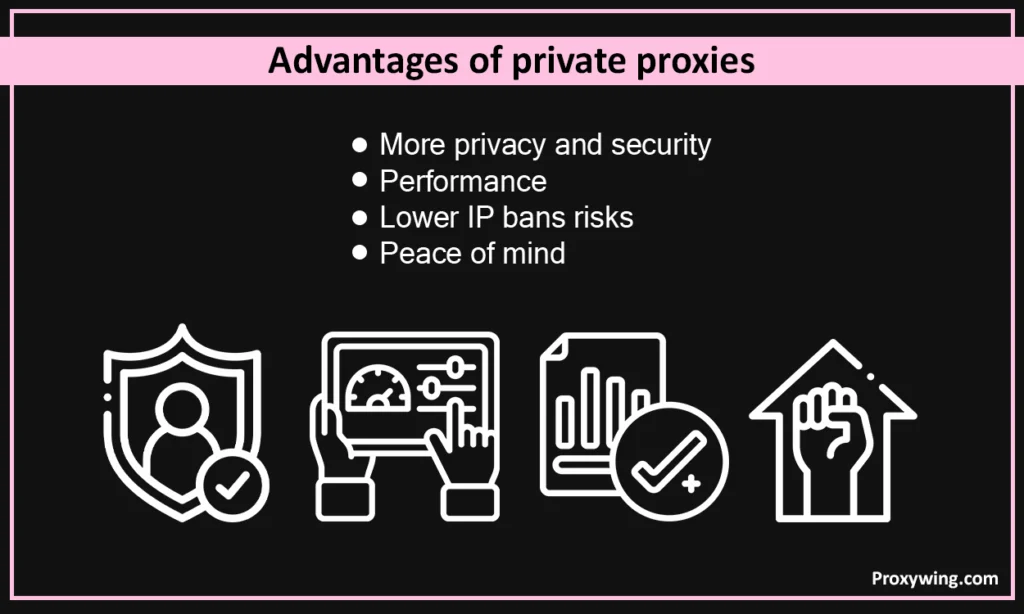
Advantages of Using Private Proxies
1. Enhanced Privacy
Your real IP address is hidden, preventing tracking from websites, advertisers, and hackers.
2. Better Security
Private proxies act as a protective barrier between your device and the internet, reducing exposure to malicious threats.
3. Faster Performance
Since the bandwidth is not shared, private proxies provide stable and high-speed connections.
4. Access Geo-Restricted Content
Private proxies allow you to connect using IP addresses from other countries, bypassing regional restrictions on websites and services.
5. Reliable Connection
Unlike free or shared proxies, private proxies are less likely to be banned or slowed down due to high traffic from multiple users.
Real-World Applications
Private proxies are used in various industries and scenarios:
- Digital Marketing: Manage multiple social media accounts without risk of bans.
- E-Commerce: Monitor competitors’ prices, track inventory, and conduct market research.
- Web Scraping: Gather data efficiently without being blocked by websites.
- Streaming & Entertainment: Access shows, movies, or live events restricted to specific regions.
- Gaming: Reduce lag and protect against DDoS attacks.
How to Choose the Right Private Proxy
When selecting a private proxy, consider:
- Speed and Reliability – Dedicated servers offer faster connections.
- Server Location – Choose IPs from regions relevant to your needs.
- Security – Look for proxies with encryption and malware protection.
- Compatibility – Ensure it works with your desired applications, like streaming, gaming, or scraping.
- Support & Maintenance – Providers with good customer support help resolve issues quickly.
Conclusion
A private proxy is an essential tool for anyone serious about online privacy, security, and performance. From hiding your IP address to accessing geo-restricted content and improving internet speeds, private proxies offer clear advantages over shared or free alternatives.
Whether you are a business professional, gamer, marketer, or everyday user, using a private proxy ensures safer, faster, and more reliable internet access. Investing in one is a smart step toward controlling your digital presence and safeguarding your online activities.
FAQs
1. Can I use a private proxy for streaming?
Yes. Private proxies allow access to geo-restricted content while maintaining fast streaming speeds.
2. Are private proxies safe for online banking?
They add an extra layer of security, but combining a private proxy with secure browsing habits is recommended for sensitive transactions.
3. How long does a private proxy last?
Most private proxies are sold as subscriptions, often monthly or yearly. Renewal is required to maintain access.
4. Can private proxies be detected by websites?
High-quality private proxies are hard to detect, but some websites may still identify them depending on the type.
5. Do I need technical knowledge to use a private proxy?
Basic setup is usually straightforward, and most providers include guides for easy configuration.
