


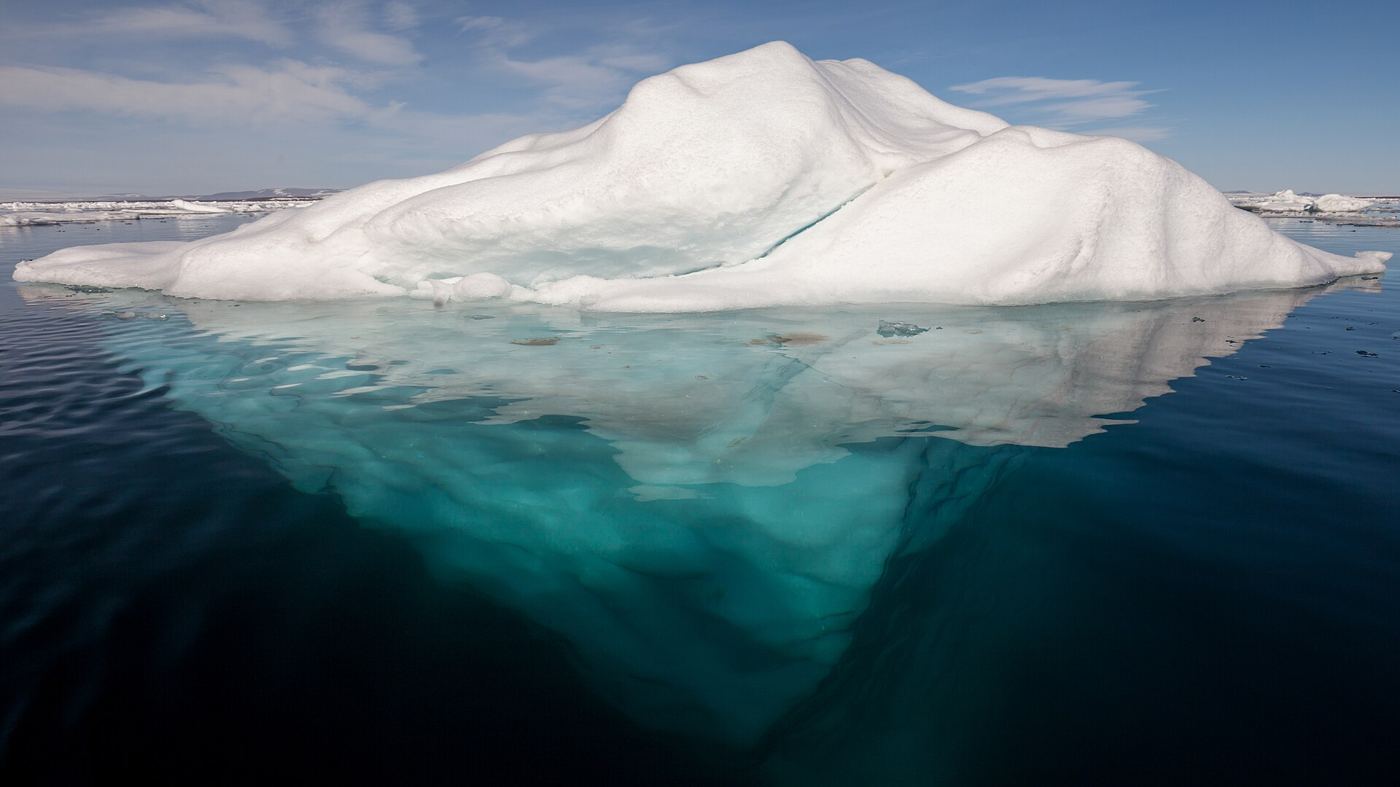
Low clouds drifting over the Arctic Ocean do far more than decorate the sky, because they help decide how much sunlight the region absorbs and how quickly its ice melts each summer. A growing body of research suggests that some of those clouds begin with biology, in the form of microscopic organisms living in the surface water and in the slushy layer where sea ice meets the sea. As waves break and bubbles burst, tiny particles carrying material from these microbes are launched into the air. Water vapour can gather on such particles, forming droplets, and at Arctic temperatures some microbial fragments are unusually good at triggering ice crystals inside clouds. Field campaigns sampling air directly above leads in the ice, far from any land or shipping, have found that the number of these ice-forming particles rises and falls with biological activity in the water below, rather than with dust blown in from distant continents. If the link holds, it means the Arctic climate system contains a subtle feedback loop connecting ocean life, cloud brightness and the survival of the sea ice itself across the coming decades.
What the Evidence Shows
Testing that idea has taken researchers onto icebreakers for weeks at a time, running clean-air laboratories that count particles one by one while biologists sample the water under the hull. Back on shore, freezing experiments with the collected seawater show that material released as phytoplankton blooms decay is particularly effective at seeding ice in clouds. Climate models have traditionally treated Arctic particles as mostly sea salt and imported pollution, so adding a biological source that changes with the seasons could shift their predictions of cloud cover and surface warming. The feedback could run either way: more open water may mean more microbes and more bright, reflective clouds, which would cool the surface, yet different cloud types at different heights can also trap heat and warm it. Which effect dominates appears to depend on the time of year and the exact stage of the bloom. Scientists stress that the amounts involved are small and the evidence is still young, but they argue that ignoring ocean biology entirely now looks like a mistake. Reporting and analysis from sources such as National Science Foundation track the same developments, and specialists following the cloud-seeding Arctic microbes say the direction is now consistent across independent lines of evidence.
The Wider Context
The wider context is a research landscape in which replication and open data now decide reputations. Findings connected to the cloud-seeding Arctic microbes are being checked by independent groups with shared datasets, and the teams involved publish their methods in full so rivals can test every step. That discipline is slower than a headline cycle, but it is why results in this area increasingly survive first contact with scrutiny.
What Happens Next
What happens next in the story of the cloud-seeding Arctic microbes will be decided by follow-up work already under way: larger samples, longer observation and instruments that have not yet come online. The researchers involved are unusually united on one point, that the current results justify the next investment of time and money. Readers will not have to wait long for the first tests of that claim. You can follow related developments in our coverage of science.
There is a practical lesson in all of this for readers deciding what to do today. Start with the verified facts, be wary of anyone promising certainty, and prefer reversible steps while the evidence is still developing. Circumstances differ by country, income and personal situation, so general guidance should always be weighed against your own context before you act on it in any significant or lasting way.
