


If you operate a sports facility, warehouse, or parking lot, you know how long it can take to line mark your surfaces. Too long, in most cases. But just how much time can be saved with the right line marking machine? You may be surprised at the answer.
Line Marking Machines Save Hours
Painting lines by hand is slow. Adding machine-guidance technology reduces that painting time by upwards of 75% on average. Not convinced? Here’s the proof. Real robotic line marking machines installed in facilities around the world shorten work times by going faster and requiring less setup. From football pitches to factory floors, the right machine can transform your operations.
How Slow is Manual Line Marking?
Let’s take a step back first and talk about speed without machines. Painting lines the old fashioned way requires chalk lines, measuring tapes, and lots of careful measurement. You know the struggle. Double check your measurements. Then, hope you lined up the string perfectly, so the lines are straight.
Even on something as “simple” as marking a regulation football pitch, this process takes at least 2.5 hours with two trained workers. That may not sound like a lot, but those hours really add up when you have to manage dozens of sports fields.
Warehouse floor markings take just as long. A good worker may lay down 25 feet of tape or paint per minute by hand. About 2,571 feet in an eight hour day. But those commercial floor spaces often have thousands of feet of lines to paint.
It’s not just speed that suffers when working manually. Chalk lines are not always straight. Lines can drift left or right. There is variability in line width. Corners aren’t always perfect 90 degrees. When lining by hand, you’ll find yourself wasting time going back to fix errors.
Painting Lines with Machinery
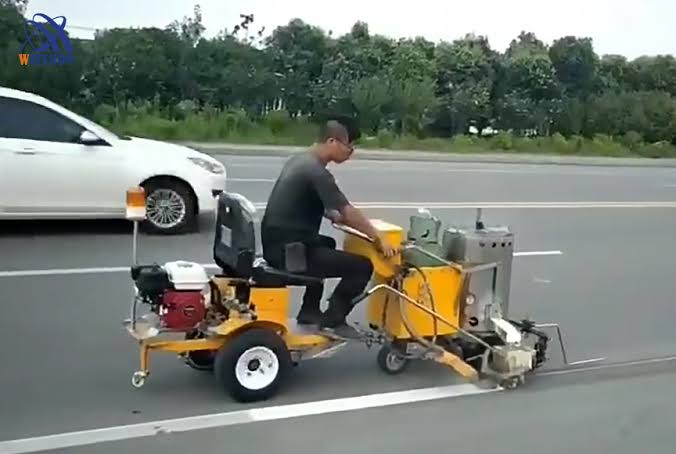
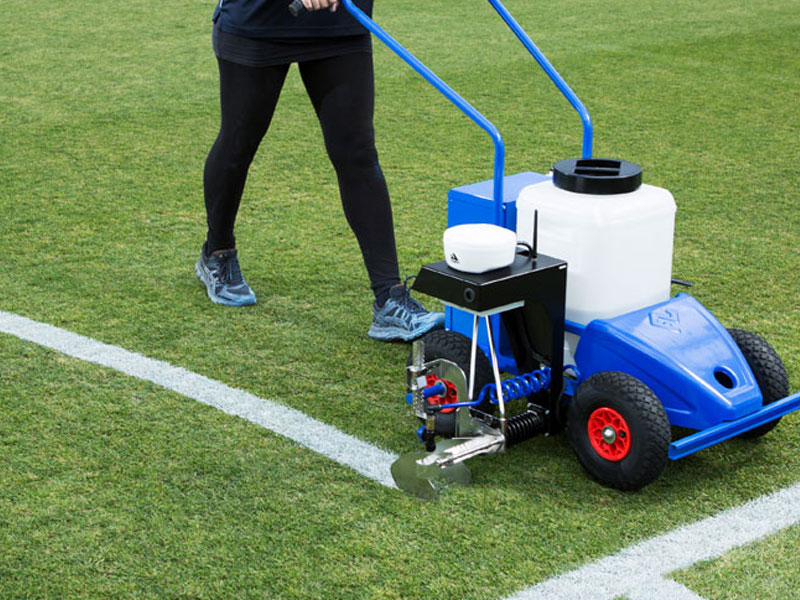
So, what does a line marking machine do differently? For starters, they do not require string lines. Basic walk-behind line marker machines lay paint down quickly and evenly in a single pass. There’s no stopping to remember your lines. No need to secure string lines over a muddy surface. With a machine, you guide the paint and let the machine do its work.
Higher end laser-line or GPS-guided line markers take this one step further. These machines use preset field maps to automatically place every line at precisely the right location.
You input the field map on a tablet computer; press start and watch as the machine does your work. This drastically cuts setup time. Painting lines manually includes a lot of setup. Line guidance machinery moves you straight to the work faster.
Here are a few numbers from actual customers who used both traditional string-line methods and machine-assisted line painting:
- Traditional string line method took 2.5 hours per pitch and required two workers
- Laser guided machine took .58 hours per pitch and required two workers
- GPS machine took .5 hours per pitch and only one worker
Instead of taking 100 worker hours to paint 20 football pitches, these teams cut their labor time down to 10 hours or less. That’s over 90% less time spent painting lines.
A line marking machine can paint as much as 9,000 feet of warehouse floor markings in an eight hour day. Compare that to the 2,571 feet our manual line marker could cover, and you can see why an investment in equipment makes sense.
Robotic Line Marking Machines Save EVEN More Time
Robotic line marking machines are also an option for many sports field types. These paint markers navigate automatically while a worker oversees the machine and completes other tasks.
Take the town of Doncaster Metropolitan Borough Council located in South Yorkshire, United Kingdom. Previously, two workers using string lines and chalk paint would spend four hours marking each of their grass playing fields. After upgrading to a robotic grass pitch line marker, those same fields could be marked by a single worker in just 20 minutes.
Instead of spending hundreds of man-hours per year line marking, they now spend around 100. The time saved allowed them to reallocate workers elsewhere. What used to require two crews can now be done by a single employee while the robot works.
Do Line Marking Machines Save Paint Too?
Yes! You’ll use less paint too. Robotic paint markers for baseball infields have been shown to use one-third less paint than traditional spray cans and bucket methods. Painting lines with GPS reduces paint variability too. GPS lines are consistent every time. You’ll use just enough paint to lay down the right line width each time.
Throw enough overtime days together and those small paint savings add up to big cost savings.
How long before a Line Marker pays for itself?
Painting lines on warehouse floors? Your line marker will likely pay for itself after marking 5,000 linear yards of lines. Every line job after that is pure profit. Sports Fields? Some have seen a return on their investment in less than one season. The more fields you have, the quicker you’ll recover your costs.
Paint Savings Are Real
Specialty paint supplier LineMarkingFluidics.com tracked how much paint their customers used on projects before and after adding machines to their operations. The difference was substantial.
A full size football pitch using traditional spray cans and three workers might use over 11 liters of paint. With a walk behind line marker machine and pre-mixed LINE-X paint, the same field can be marked with as little as 1.1 liters of paint.
Case Study: Cutting Line Marking Time at a Sports Complex
A regional sports complex was tasked with upkeep for several football and rugby pitches throughout the season. Using string lines and manual measurement, two grounds staff would spend hours setting out and marking each field before every round of fixtures. Because it took so long to mark the fields, there was not enough time to get any other work done.
Solution: The complex invested in a walk-behind line marker that offered adjustable line widths. Instead of measuring and marking each line by hand, grounds staff were able to complete each field quicker than before. Lines were also straighter and more consistent overall. Because line marking took less time to set up, workers were able to perform other maintenance that day as well.
Results: By the end of the season, the sports complex saw savings in labour hours, had cleaner looking playing fields, and reduced paint usage thanks to more consistent line widths.
Key takeaway: If your organisation routinely marks large spaces, a quality line marking machine can save labour hours, increase consistency, and free up worker’s time.
Frequently Asked Questions
How much time can I save with a line marking machine?
Outline marking machines can save you hours on a job by eliminating measuring, setup, and application time. The actual time saved will vary based on the size of your project.
Are line marking machines more accurate than hand-line marking?
Yes, line markers tend to be straighter and more consistent than lines painted by hand. Most machines also allow you to set the line width, reducing the chance of error or touch-ups.
Will a line marker reduce paint usage?
Line Marking Machines Typically, yes. Line markers apply paint more evenly, which reduces the amount of waste and overspray you’ll find with some manual applications.
Can small businesses benefit from a line marker?
Line Marking Machines for Business Absolutely! Our manual line markers and walk-behind units are perfect for schools, sports teams, contractors, warehouses, and businesses that routinely maintain smaller areas.
Do I need more than one person to run a line marker?
While it depends on the size of the machine and project, many of our walk-behind line markers are designed to be operated by a single person.
What surface can I use a line marker on?
Our line marking machines are compatible with asphalt, concrete, tarmac, warehouse floors, sports courts, artificial turf, and natural grass. Make sure to choose the right paint as well.
Is purchasing a line marker worth it?
If you frequently need to repaint parking lots, warehouse floors, playing fields, or road lines, a good line marker can pay for itself through saved labour and increased efficiency.
How do I know which line marker is right for me?
Make sure to look at the size of your typical jobs, the surface you’ll be marking, how often you plan to use the machine, and if you need a manual, aerosol, airless, or GPS-assisted line marker. Choosing the right machine for your needs will ensure maximum productivity and value.
Final Words
Should You Buy A Line Marker Machine? If you have to paint lines more than monthly, line marking machines are a no-brainer. Walk-behind line markers are a great way to introduce technology to your line marking projects without breaking the bank. Laser line or GPS line markers are ideal if speed and accuracy are your top goals.
A robotic line marker may be right for you if you manage a lot of fields or have large indoor spaces. Trying to keep up with painting lines manually takes your employees away from other value added work. A line marker machine lets them do both.
