


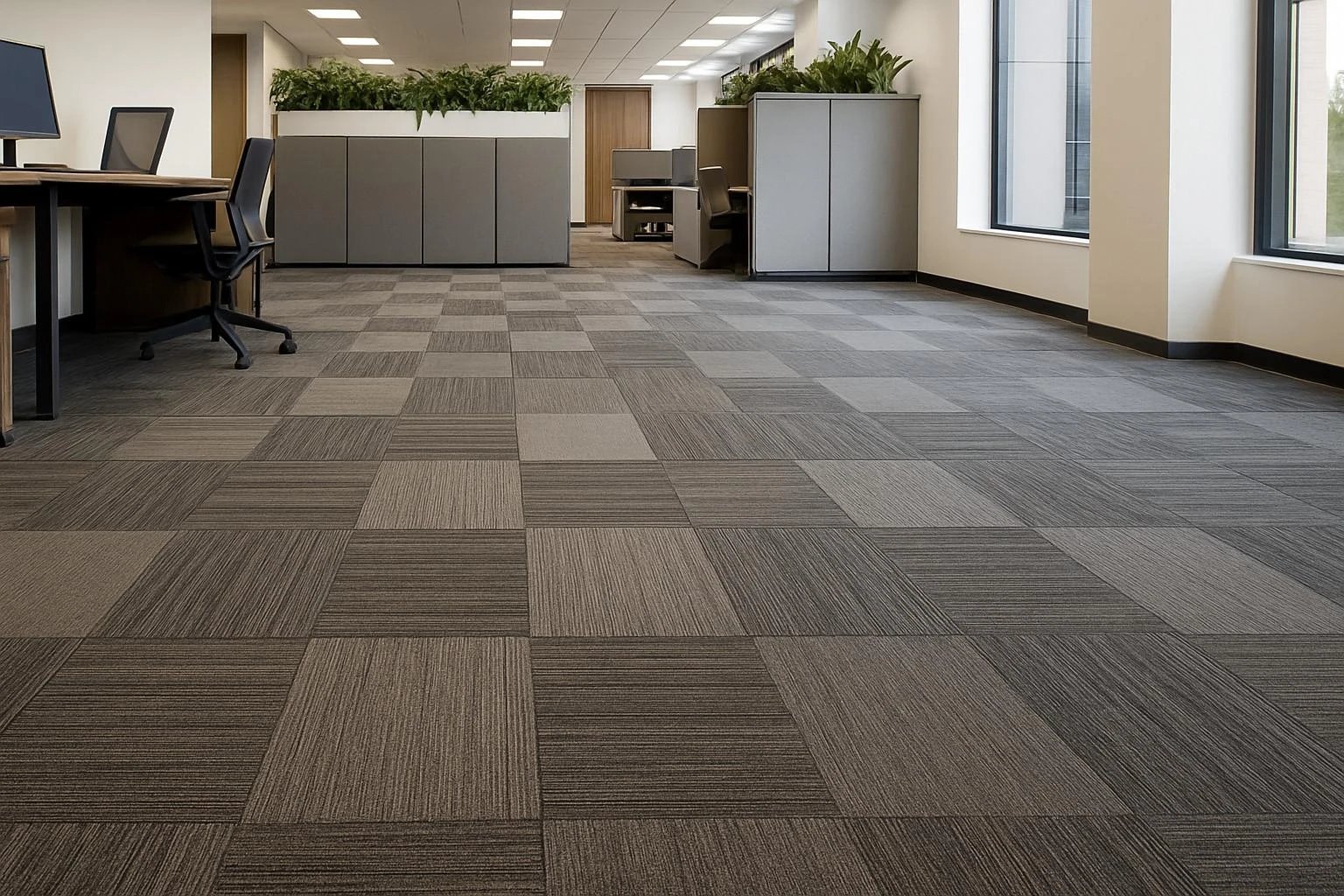
Choosing flooring for a busy workplace is rarely just a design decision. It affects how a room sounds, how staff feel during long meetings, how easily facilities teams can clean and repair the floor, and how professional the space looks to visiting clients. That is why so many companies researching Office carpet dubai start with carpet tiles rather than broadloom rolls. Tiles give a business flexibility: individual pieces can be lifted, cleaned or replaced without disturbing the whole floor, and patterns can be mixed to define zones without building walls or adding expensive partitions.
Why carpet tiles suit modern offices
Open-plan offices, co-working spaces and hybrid workplaces all change more often than they used to. Teams expand, meeting rooms become phone booths, and collaboration areas move as headcount shifts. Carpet tiles cope with that change far better than a single fitted sheet. If a desk cluster moves, the pattern underneath still looks intentional. If a coffee spill stains one corner, a facilities manager can swap a handful of tiles during a lunch break instead of closing the room. Over a five-year lease, that repairability often matters more than a small difference in the initial purchase price.
Tiles also help with access floors and cabling. Many commercial buildings run power and data beneath raised flooring, and a tiled carpet surface can be lifted in sections when technicians need to reach those services. That reduces downtime and avoids the patchwork repairs that appear when a roll carpet has to be cut and re-joined. For landlords, a tile system can also make dilapidation work simpler at the end of a tenancy, because worn routes between the entrance, desks and meeting rooms can be refreshed without replacing every square metre.
Planning layout, colour and traffic routes
A good layout starts with traffic. The route from reception to the meeting rooms will wear faster than the floor beneath storage cupboards, so it deserves a denser pile, a forgiving pattern and a colour that hides everyday dust. Mid-tone greys, blues and textured mixes are popular for a reason: they look smart under office lighting and do not show every footprint. Brighter accents still have a place, but they work best in breakout zones, branding walls or meeting rooms where footfall is lighter and the colour is meant to be noticed.
Pattern direction can quietly guide people through a space. Running tiles in one direction along a corridor creates a sense of movement, while a quarter-turn or checkerboard installation in a collaboration area signals that the zone is different. Designers often use a plain tile for the main field and a patterned or contrasting tile for borders, walkways and the area around a reception desk. Ask for a visual plan before installation begins, because seeing the repeat on paper is much cheaper than changing your mind once half the floor is already fixed down.
Budgeting beyond the price per tile
A realistic budget includes more than the tiles themselves. Subfloor preparation, adhesive or tackifier, edging, waste allowance, out-of-hours labour and moving furniture all belong in the calculation. When comparing quotations for Office carpet dubai, check whether each supplier has allowed for the same things, because a low headline price can grow quickly if levelling, uplift of the old floor or disposal was excluded. It is also sensible to buy a small stock of spare tiles from the same production batch and store them flat on site, ready for future repairs.
Installation timing deserves the same attention as cost. Many offices schedule fitting over a weekend or in phases, floor by floor, so staff can keep working. Agree in advance who moves desks, who disconnects and reconnects equipment, and how long the adhesive needs before heavy furniture returns. A phased plan should also protect newly laid areas from construction dust if other trades are still on site. Clear sequencing avoids the familiar problem of a beautiful new floor being marked by painters, electricians or delivery trolleys in its first week.
Keeping the floor looking new
Daily care is simple but must be consistent. Entrance matting traps grit before it reaches the carpet, vacuum cleaners with rotating brushes lift pile in traffic lanes, and prompt spot cleaning stops small marks becoming permanent stains. Facilities teams should keep a written rotation so quiet corners are not forgotten and busy routes receive extra attention before they look tired. Every six to twelve months, a professional deep clean can remove the embedded soil that routine vacuuming leaves behind and restore the colour difference between walkways and the rest of the room.
In the end, the best office carpet is the one matched to how the building is actually used: durable where people walk, calm where people concentrate, flexible where teams change, and easy to repair when accidents happen. Start with honest measurements, compare like-for-like quotations, insist on seeing physical samples under your own lighting, and plan installation around the working week. With those basics handled carefully, carpet tiles become a long-term asset for the workplace rather than a recurring maintenance headache, and the floor will still look presentable when important visitors arrive unannounced.
