


Saturn has smashed its own record. Astronomers have confirmed 128 new moons in orbit around the ringed giant, taking its official total to 274 and leaving every other planet far behind. The announcement, backed by the International Astronomical Union, is the culmination of a survey carried out with the Canada-France-Hawaii Telescope, in which researchers including a team from the University of British Columbia followed up years of faint candidate detections until each orbit could be proved beyond reasonable doubt.
Years of Watching the Same Patch of Sky
None of the new moons is large. Most are irregular fragments a few kilometres wide, travelling on stretched, tilted orbits far from Saturn’s bright rings. Detecting them required returning to the same fields repeatedly between observing seasons, then linking detections across years. Software shifted and combined the images so that anything moving with Saturn grew brighter, while stars blurred away. Candidates that survived that process still needed classical follow-up: precise position measurements, checked by independent observers, before the formal catalogue would accept them as genuine, permanent members of the Saturn system.
Putting Jupiter Firmly in Second Place
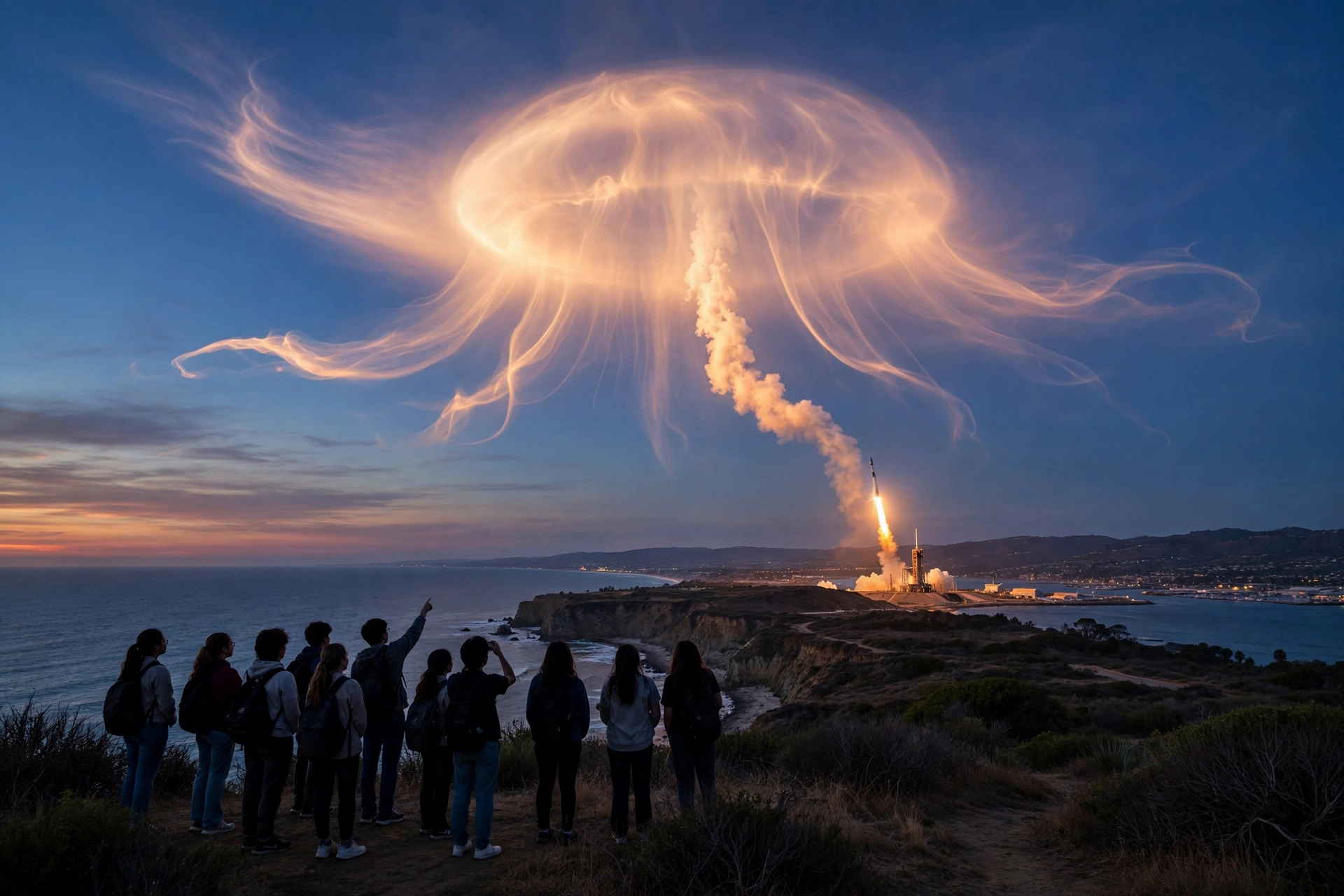
Jupiter, long assumed to be the moon king, currently has 95 recognised satellites. Saturn’s tally of 274 is therefore not a narrow lead but a rout, and astronomers say it reflects reality rather than favouritism: Saturn genuinely appears to host far more captured fragments. The difference may trace back to a relatively recent collision that shattered a medium-sized moon into dozens of pieces, seeding whole families of related fragments. If you followed our report on the SpaceX launch that drew a jellyfish cloud over the east coast, this is the slower, quieter side of space science, built on patience rather than spectacle.
Reading the Wreckage of Ancient Impacts
The scientific value of these moons lies in their groupings. Clusters sharing near-identical orbits are almost certainly debris from single parent bodies destroyed by impacts. By mapping each family, researchers can estimate when the break-up happened and how debris spreads under Saturn’s gravity over millions of years. That, in turn, calibrates models used across the outer solar system. The University of British Columbia team helped verify many of the orbits, continuing a long tradition of Canadian involvement in the Mauna Kea observatories and in solar system survey work generally.
Could the Count Rise Even Higher?
Probably, yes. The survey is most complete for moons a few kilometres across; anything smaller, darker or closer to the glare of the planet could still be hiding. Upcoming survey telescopes will scan the sky deeper and more often, and Saturn will be high on their target lists. Each new generation of instruments has rewritten this record, and there is little reason to think the process has finished. What has changed is the scale of Saturn’s lead: rivals would need not a handful of lucky finds but entire families of undiscovered moons to close a gap of nearly one hundred and eighty.
A Reminder of How Much Remains Unmapped
It is tempting to think of the solar system as fully charted, yet a planet visited by spacecraft and studied for centuries has just gained 128 moons in a single announcement. The lesson is that completeness depends on sensitivity, and sensitivity keeps improving. For amateur observers, the new moons are far too faint to see, but Saturn itself remains a glorious sight through a small telescope, rings and all. Knowing that 274 worlds, large and small, travel with it only adds to the wonder of that view on a clear autumn night.
For Readers Who Want to Learn More
If this record has sparked your curiosity, Saturn rewards a closer look. Its largest moon, Titan, has lakes of liquid methane and a dense orange atmosphere, while Enceladus sprays icy plumes from a hidden ocean that astrobiologists find deeply intriguing. The planet itself is a gas giant light enough, in theory, to float in a large enough ocean. Free planetarium software can show you where Saturn sits in tonight’s sky from your location, and local astronomy clubs often host public viewing nights during the planet’s brightest months. The 274 moons in the headline are invisible to backyard telescopes, but the world they orbit is gloriously visible, and it makes an excellent starting point for anyone’s astronomy hobby.
