


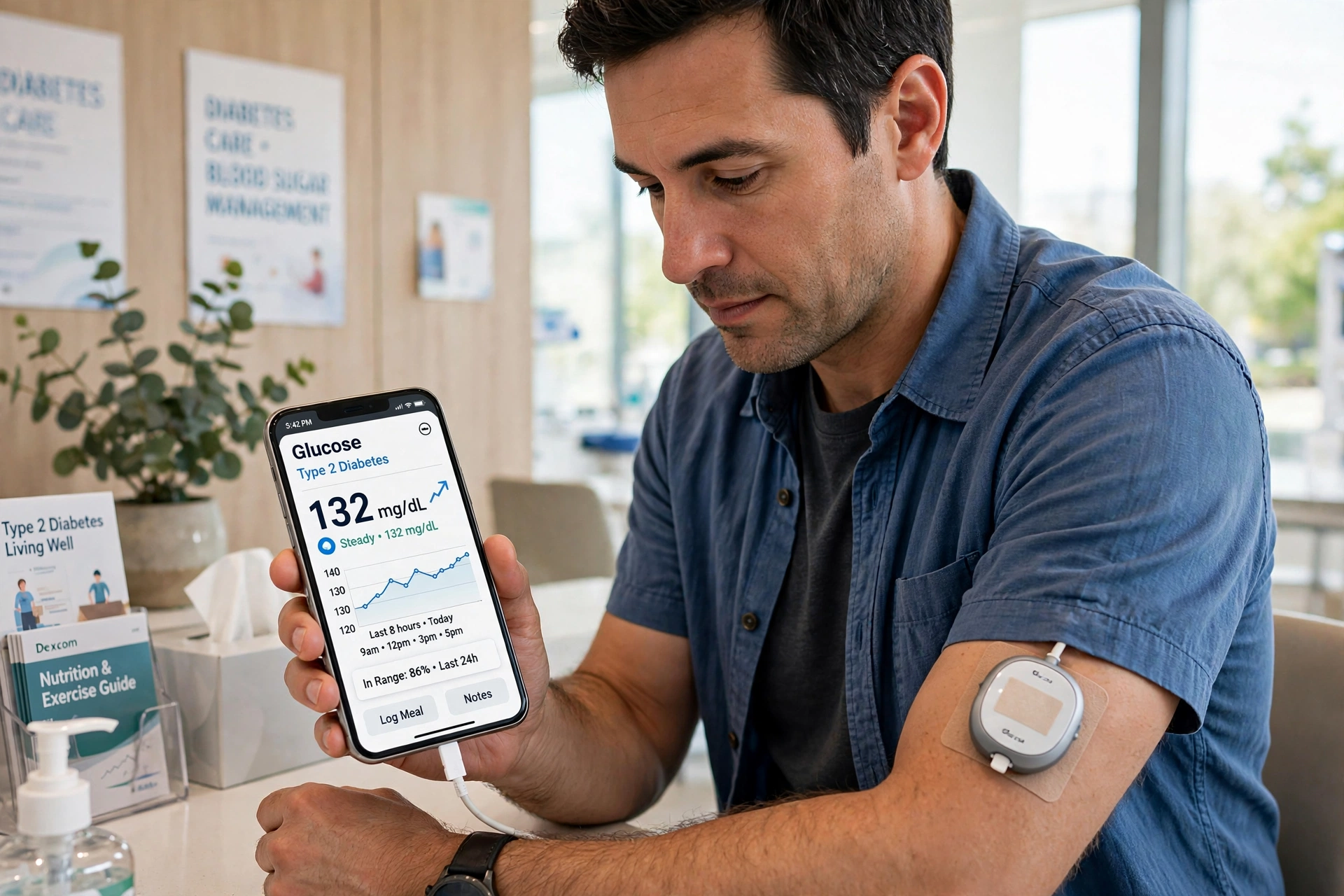
Continuous glucose monitors could help many more adults with type 2 diabetes keep their blood sugar in a healthy range, even if they do not use insulin, according to the largest clinical trial of its kind. The study, published in the New England Journal of Medicine, found that people using the wearable sensors spent approximately five more hours a day in their target blood sugar range compared with those relying on standard monitoring. For a condition that affects hundreds of millions of people worldwide, an extra five hours a day in range is a meaningful, everyday difference.
What the trial found
Continuous glucose monitors, often called CGMs, are small wearable sensors that track glucose throughout the day and night and send readings to a phone or receiver. Until now, the strongest evidence for their benefit has been in people who use insulin, where frequent readings help guide doses. This trial focused on a much larger and often overlooked group: adults with type 2 diabetes who manage their condition without insulin, through medication, diet and activity.
Details shared by the University of Colorado Anschutz Medical Campus explain that participants using CGMs saw more stable readings and spent substantially longer each day within the recommended target range. Time in range matters because prolonged periods of high blood sugar are linked over years to damage to the eyes, kidneys, nerves and heart. Small daily improvements, repeated over months, can therefore carry long-term weight.
Why feedback changes behaviour
Researchers say the technology works not only as a measuring tool, but as a teacher. A finger-prick test gives a single number at a single moment. A continuous monitor shows a pattern: what a particular breakfast does by mid-morning, how a short walk after dinner softens a spike, or how a late, heavy meal affects readings overnight. Seeing cause and effect in near real time helps many patients make smaller, more sustainable changes than a general instruction to eat better or move more.
That behavioural effect will be familiar to readers of our coverage of financial intelligence software and how businesses evaluate new tools. In both cases, timely, readable data changes decisions. A dashboard that arrives weeks later rarely changes anything; information delivered at the moment of choice often does. For diabetes care, the moment of choice might be a second helping, a sugary drink, or a decision to take a ten-minute walk.
Who could benefit, and what are the limits?
The findings raise an important question for health systems and insurers: should CGMs be offered more widely to people with type 2 diabetes who do not use insulin? The devices cost money, require training, and generate a large amount of data that clinics need time to review. Not every patient will want to wear a sensor, and some may find constant readings stressful rather than empowering. The trial does not settle those practical questions, but it strengthens the case for discussing them seriously rather than assuming the technology is only for insulin users.
Doctors also caution that a monitor is not a treatment on its own. Medication, regular check-ups, eye screening, foot care and support with diet remain central. The full study is available through the New England Journal of Medicine, and patients considering a CGM should discuss the results with their own care team, who can judge whether the device fits their treatment plan, other conditions and daily routine.
A shift in everyday diabetes care
The direction of travel in diabetes care has been toward more personal, data-guided management, and this trial accelerates that shift. Wearable sensors, phone apps and remote reviews by clinicians are combining into a model where care happens between appointments, not only during them. Similar themes appear in our reporting on how technology and demand are reshaping everyday services: tools that were once specialist equipment are becoming part of ordinary life.
For patients, the most encouraging message is practical rather than technical. Spending five more hours a day in target range was achieved not with a new drug, but with better information, used consistently. If health systems can find fair and affordable ways to provide that information, millions of people living with type 2 diabetes could see steadier days, fewer extremes, and a clearer sense of control over a condition that demands attention every single day.
