


Increasing revenue is one of the biggest priorities for any business, yet many companies focus almost entirely on acquiring new customers while ignoring the enormous revenue potential hidden within existing transactions. In reality, one of the fastest and most cost-effective ways to grow a business is not always through more traffic or more customers, but through increasing the value of each sale.
This is where upselling and cross-selling become powerful strategies. When implemented correctly, these techniques can dramatically increase average order value, improve customer experience, and maximize profitability without significantly increasing marketing costs.
Many of the world’s most successful companies generate a large portion of their revenue through strategic upselling and cross-selling systems. These methods work because customers who are already ready to buy are far more likely to spend more when presented with the right offer at the right time.
For entrepreneurs building scalable businesses or choosing to register a company in Hong Kong as part of an international expansion strategy, mastering revenue optimization techniques becomes even more important. While business structure can support growth, profitability often depends on how effectively each customer interaction is monetized.
This guide explains how upselling and cross-selling work, why they are so effective, and how businesses can use them strategically to increase revenue in 2026 and beyond.
Understanding the Difference Between Upselling and Cross-Selling
Although upselling and cross-selling are closely related, they are not the same strategy.
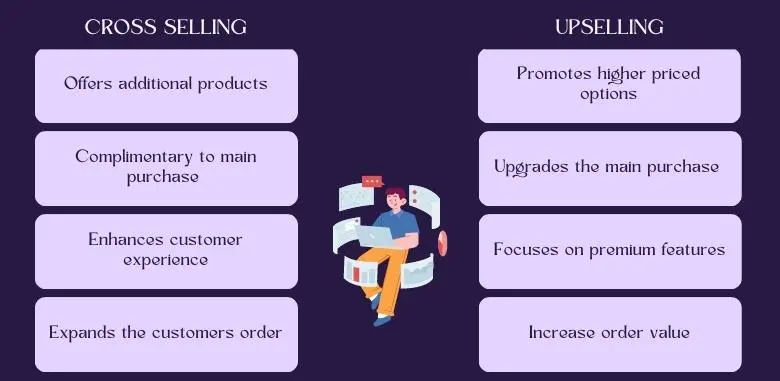
Upselling involves encouraging a customer to purchase a higher-value version of the product they are already considering. The goal is to increase the value of the original purchase by offering an upgraded option with additional features, benefits, or quality.
Cross-selling, on the other hand, involves recommending complementary products or services related to the original purchase. Instead of replacing the original item, it enhances the overall purchase experience.
Both strategies increase revenue, but they do so in different ways. Understanding the distinction is essential for implementing them effectively.
Why Upselling and Cross-Selling Work So Well
These strategies work because they target customers who have already entered a buying mindset. At this stage, trust and purchase intent are already established, making additional offers far easier to accept.
Acquiring a new customer is usually far more expensive than increasing the value of an existing transaction. This is why upselling and cross-selling often produce higher profitability than customer acquisition campaigns alone.
They also improve customer convenience. When recommendations are relevant and useful, customers perceive them as helpful rather than intrusive.
This creates a win-win situation where both the business and the customer benefit from the transaction.
The Psychology Behind Higher Order Value
Customer psychology plays a major role in why upselling and cross-selling are effective. Once a customer commits to making a purchase, the mental barrier to spending additional money becomes lower.
At this stage, the customer is already emotionally invested in solving a problem or achieving a desired outcome.
A strategically presented offer feels like a logical extension of the original purchase rather than a separate buying decision.
This is why timing and relevance are critical. Poorly timed or irrelevant offers feel aggressive, while well-positioned offers feel valuable.
How to Create Effective Upsell Offers
A successful upsell must feel like a meaningful improvement rather than an unnecessary upgrade.
The upgraded product should clearly demonstrate additional value, whether through improved performance, convenience, quality, or long-term savings.
Customers are unlikely to accept an upsell if they do not understand why the higher-priced option is better.
Clarity is essential. The customer should immediately understand the benefits of upgrading.
Effective upselling focuses on solving problems more effectively, not simply increasing price.
The Importance of Strategic Pricing
Pricing strategy plays a crucial role in upselling success. If the price gap between the original offer and the upsell is too large, customers may reject the upgrade.
A moderate price increase often performs best because it feels manageable relative to the original purchase.
This pricing structure creates a psychological perception of value without causing hesitation.
Successful businesses carefully structure pricing tiers to encourage movement toward higher-value options naturally.
Building Effective Cross-Selling Systems
Cross-selling works best when recommendations are directly related to the customer’s original purchase.
Random or unrelated suggestions reduce trust and weaken the buying experience.
The goal is to enhance convenience by helping customers discover products they are likely to need anyway.
For example, accessories, complementary services, or related products often perform well because they increase the usefulness of the original purchase.
Strong cross-selling systems are based on customer relevance rather than aggressive selling.
Timing Matters More Than Most Businesses Realize
One of the biggest factors in upselling and cross-selling success is timing.
Offers presented too early may overwhelm the customer before they commit to the original purchase. Offers presented too late may miss the buying momentum entirely.
The best timing usually occurs during checkout or immediately after the customer has made the initial buying decision.
At this stage, trust and purchase intent are at their highest levels.
Proper timing significantly increases conversion rates.
Personalization and Customer Data
Modern businesses have access to more customer data than ever before. This data allows companies to personalize recommendations based on behavior, purchase history, and preferences.
Personalized offers perform significantly better than generic ones because they feel more relevant and useful.
Customers are more likely to respond positively when recommendations align with their interests and needs.
Personalization transforms upselling and cross-selling from sales tactics into customer experience enhancements.
Avoiding Aggressive Sales Tactics
One of the biggest mistakes businesses make is becoming too aggressive with upselling and cross-selling.
When customers feel pressured or manipulated, trust declines and purchase satisfaction decreases.
The goal is to improve the customer experience, not create frustration.
Successful businesses focus on helpful recommendations rather than constant selling pressure.
Subtlety and relevance are more effective than aggressive tactics.
Using Upselling and Cross-Selling in E-Commerce
E-commerce businesses benefit enormously from these strategies because digital platforms make recommendations easy to automate.
Product pages, checkout flows, and post-purchase emails can all be optimized to present relevant offers.
Many major e-commerce platforms include built-in features for upselling and cross-selling, allowing businesses to increase average order value efficiently.
However, automation should still feel natural and customer-focused.
Poorly designed recommendation systems can reduce trust instead of increasing revenue.
Service-Based Businesses Can Use These Strategies Too
Upselling and cross-selling are not limited to physical products. Service-based businesses can also apply these principles effectively.
For example, agencies can offer premium packages, additional consulting, or ongoing support services.
The same psychological principles apply because customers already trust the provider and are open to additional value.
Service businesses often achieve significant revenue growth through strategic offer expansion.
International Business Growth and Revenue Optimization
As businesses expand internationally, maximizing revenue efficiency becomes even more important.
Some entrepreneurs choose to Register a company in Hong Kong as part of a global growth strategy designed to support international operations and digital business scalability.
Hong Kong is widely recognized as a major international business hub that supports cross-border entrepreneurship and global trade.
The Hong Kong Companies Registry provides the legal framework for incorporation and compliance, enabling structured international operations.
However, while business structure can support expansion, revenue growth ultimately depends on customer experience, conversion strategy, and value optimization techniques such as upselling and cross-selling.
Measuring Success and Optimization
The effectiveness of upselling and cross-selling should always be measured through data.
Metrics such as average order value, conversion rate, customer retention, and lifetime value help determine whether strategies are working effectively.
Continuous testing and optimization are essential because customer behavior changes over time.
Successful businesses treat upselling and cross-selling as evolving systems rather than static tactics.
Common Mistakes Businesses Make
One common mistake is offering irrelevant products that do not align with the customer’s needs.
Another mistake is overwhelming customers with too many offers, which creates decision fatigue.
Some businesses also prioritize short-term revenue over long-term customer trust, leading to reduced loyalty.
Effective upselling and cross-selling require balance, relevance, and customer-centric thinking.
Conclusion
Upselling and cross-selling are among the most effective strategies for increasing revenue without dramatically increasing customer acquisition costs.
By focusing on customer value, strategic timing, and relevant recommendations, businesses can significantly increase average order value while improving the customer experience.
These techniques are not about manipulation. They are about helping customers discover better solutions and complementary products that enhance their original purchase.
For entrepreneurs scaling globally or choosing to Register a company in Hong Kong as part of an international business strategy, maximizing revenue efficiency becomes even more important in competitive global markets.
Ultimately, businesses that master upselling and cross-selling are not just increasing sales. They are building stronger customer relationships and creating more sustainable growth systems.
FAQs
What is the difference between upselling and cross-selling?
Upselling encourages customers to buy a higher-value version of a product, while cross-selling recommends complementary products.
Why are upselling and cross-selling effective?
Because they target customers who are already in a buying mindset and more open to additional purchases.
Can upselling increase customer satisfaction?
Yes, when done correctly, it helps customers discover better solutions that meet their needs more effectively.
What is the best time to upsell a customer?
The best time is usually during checkout or immediately after the original purchase decision.
Do these strategies work for service businesses?
Yes, service-based businesses can upsell premium packages and cross-sell additional services.
Does company structure impact revenue growth?
Indirectly. Entrepreneurs who Register a company in Hong Kong may support global operations more efficiently, but revenue growth depends on execution and strategy.
What is the biggest mistake in cross-selling?
Recommending irrelevant products that do not align with customer needs is one of the most common mistakes.
You should also read: TechAiTech
