


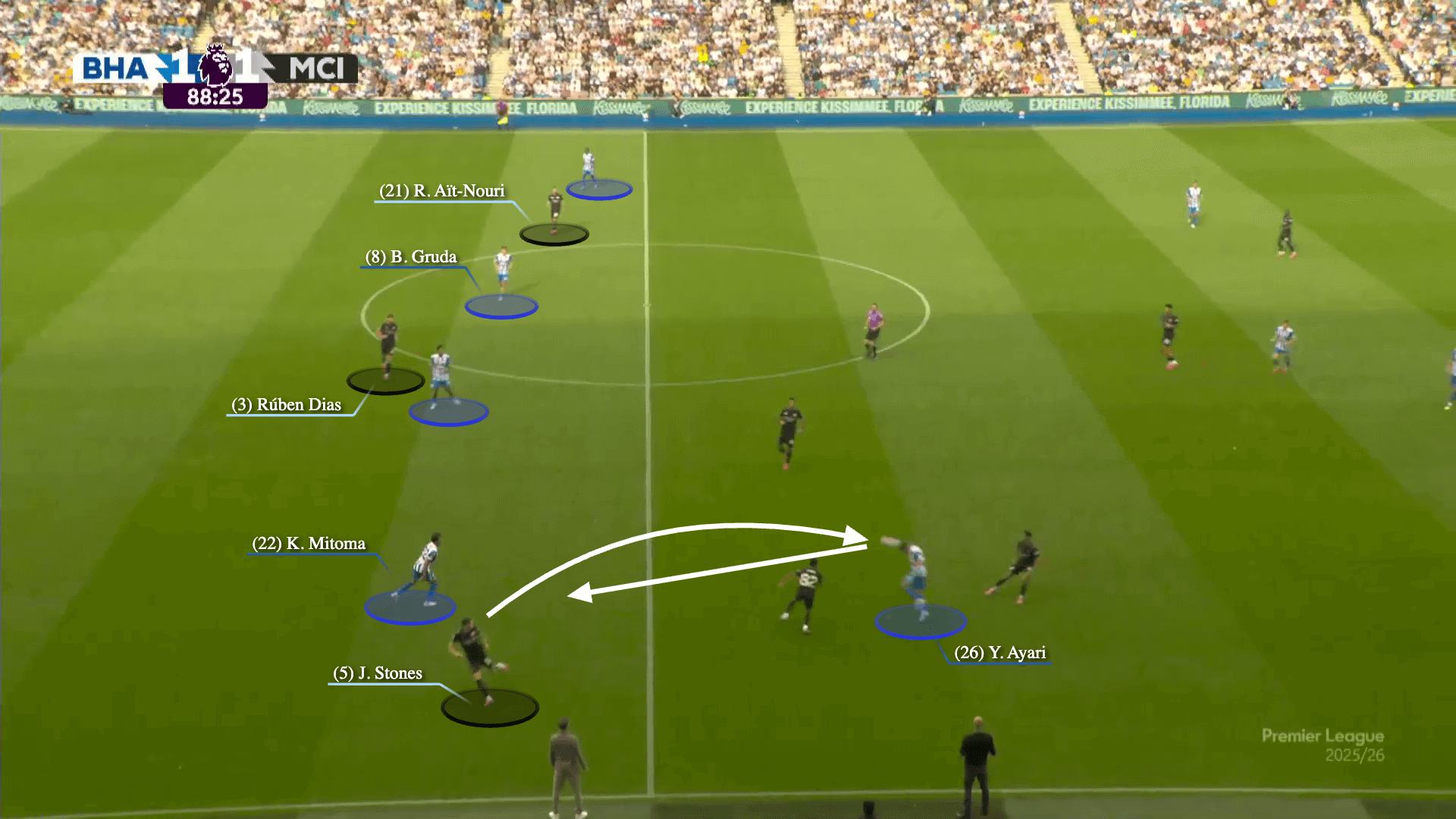
High-pressing football in the Premier League creates specific rhythms of attacks, blocked shots, and clearances that make corner betting particularly responsive to how a match actually unfolds minute by minute. When you learn to connect pressing intensity with where the ball ends up on the pitch, live corner markets stop looking random and start to resemble a series of repeatable patterns you can anticipate.
Why high-pressing football naturally produces corners
High-pressing sides compress the game into the opponent’s defensive third, forcing hurried clearances, rushed blocks, and deflections that regularly spill over the byline. Premier League teams that defend high and attack quickly, such as those that sustain long spells around the box, tend to generate more blocked shots and wide crosses, which are two of the most frequent sources of corners.
Because the Premier League is generally more fast-paced and end-to-end than many other leagues, the base rate of corners per match already sits around 10–11, and high-press encounters tend to push matches above that benchmark when tempo and territory are both tilted towards one goal. The crucial point is that pressing is not static across 90 minutes: when intensity spikes, you should expect corner counts to cluster into short bursts rather than appear evenly spaced across the game.
How Premier League corner patterns look in numbers
In a typical Premier League season, overall corners cluster around a league average of roughly 10–11 per match, but specific high-pressure fixtures regularly overshoot that baseline when one team pins the other deep for long stretches. Some corner-focused analyses show leading sides recording more than 6.5 corners per game on their own, especially when their style involves constant wide attacks and repeated waves of pressure that “snowball” into multiple corners in short windows.
Set-piece data also shows that corners are not just noise: top Premier League teams convert around 12–15% of their corners into goals, which incentivises them to keep forcing the ball wide and recycling attacks rather than settling for speculative shots from distance. When you combine a team that presses high, attacks with width, and is statistically strong on set pieces, the same tactical DNA that drives their general performance also amplifies both the frequency and the value of corners in that match.
Mechanism: from pressing trigger to corner outcome
The chain from pressing to corner usually begins when the pressing team forces the opponent into a rushed pass or clearance under pressure near its own box, often towards the flanks where full-backs and wingers are isolated. That forced decision leads to either a hurried block on a cross, a deflected shot, or a clearance into safe wide areas, each of which disproportionately ends in a corner rather than a throw-in because the ball is already in or near the penalty area. Over the course of 90 minutes, repeated pressing triggers increase the volume of these chaotic end-zone actions, which is why high-press fixtures often produce “bursts” of two or three corners within a few minutes when one side senses vulnerability and refuses to let the opponent out.
Reading momentum live instead of trusting averages
Live corner betting only becomes logical when you treat averages as background context and judge each match by how it is playing out in real time. Sustained pressure is visible long before a corner is actually awarded: you see a sequence of entries into the final third, repeated crosses, second-ball recoveries outside the box, and defenders clearing into touch on the last line.
Analyses of profitable in‑play approaches emphasise waiting for specific “pressure windows” rather than betting blindly from kick-off; examples include the final 10 minutes when a strong team is chasing a single-goal deficit, or phases just before half-time when the favourite suddenly accelerates its attack. If live statistics show high possession in the attacking third, multiple recent shots, and very few relief attacks from the defending side, you have a data-backed indication that the next few minutes are more likely than average to generate at least one corner.
Key live indicators that a high press will translate into corners
Patterns on the pitch give you advance warning that corner counts may spike if the current trend holds for even five more minutes. Some of the most useful real-time indicators include:
- Repeated crosses from both full-backs and wingers in quick succession.
- Shots being blocked inside the box rather than missing the target altogether.
- The defending team clearing the ball into wide areas instead of up the pitch.
- Short goal kicks that are quickly pressed and forced back towards their own corner flag.
- A rising foul count around the corners of the box, signalling desperate defending and late tackles.
Each of these signs points to the same underlying reality: the defending team cannot progress the ball beyond its own defensive third, meaning nearly all play is compressed near its penalty area. When that happens, every clearance, block, and interception takes place so close to the byline that small deviations in contact angle shift what would be a throw-in 30 metres upfield into a corner from inside the box, making it rational to upgrade your expectation of near-term corners above pre-match models.
Tactical match‑ups that strengthen or weaken high‑press corner logic
The interaction between two tactical plans determines whether a high-press game truly becomes corner-heavy or instead gets stuck in midfield. High-press versus deep-block is usually favourable for corners, because the deep side spends long periods defending crosses and cut-backs near its own goal, conceding multiple corners even when it avoids conceding goals.
In contrast, two compact, counter-attacking teams often bypass the middle with long balls and shoot early, generating fewer patient wide attacks and therefore fewer opportunities for blocked crosses and repeat corners. When both sides also share possession evenly and reset the ball through midfield instead of forcing it wide, much of the game occurs between the boxes, weakening the logic that pressing intensity alone will drive corner counts upward.
High-press corner patterns through a live betting lens
From an in-play perspective, high-press football turns corners into a moving target where timing matters more than pre‑match totals. Corner-specific strategies recommend monitoring not just total shots and possession but also the minute-by-minute distribution of attacks, since late surges by a dominant side behind on the scoreboard frequently add several corners in the final quarter of an hour.
Some guides highlight “pressure points” where live over-corner bets become attractive: for example, when a title-chasing favourite trails by one goal with less than 15 minutes left, yet still controls possession in the attacking third and is piling in crosses. In these scenarios, the rapid succession of blocks, saves, and last-ditch clearances compresses several corner events into a short time span, which is exactly what you want when taking live over lines that only need one or two more corners to land.
Where the high‑press corner idea breaks down
There are clear failure cases where high-press football does not produce the corner volume that the label might suggest. One common scenario occurs when the pressing team wins the ball high but finishes attacks early with low-probability shots from the edge of the area, sending attempts off target and out for goal kicks instead of forcing blocks or defensive touches.
Another failure mode comes when the opponent successfully bypasses the press with direct balls over the top, pulling the game into stretched transitions where attacks end with one-on-one finishes or tackles well away from the corner flag. Even psychologically driven situations, such as a heavily favoured home side growing impatient, can result in rushed long-range efforts that reduce the proportion of attacks concluding with wide crosses and thereby undercut the assumed corner potential of a high-press matchup.
Integrating Premier League corner logic with UFABET markets
When you start to connect pressing patterns with corner outcomes, the specific way you interact with live markets becomes just as important as your tactical reading of the match. In situations where you have already confirmed that a fixture fits the high-press profile—dominant territorial control, repeated wide entries, and a trailing favourite—the structure of available corner lines, such as over/under totals, team corners, or “race to” markets, determines which wager best matches the story the game is telling. Once that alignment between game state and market type is clear, using a betting interface such as ufabet168 bet becomes less about chasing a hunch and more about selecting precise corner-related options—team totals, handicaps, or late over lines—that reflect the likelihood of continued pressure rather than simply the historical reputation of the sides involved in the Premier League.
Managing expectations when using casino online for corner-focused play
Even when your model for high-press corner betting is sound, the long-term outcome depends on whether you treat each stake as part of a wider structure instead of a standalone gamble. Observations from experienced in‑play bettors stress that edge in corners often comes from small pricing mistakes under time pressure, so a fragmented approach—jumping in and out emotionally—usually wastes the value you extracted from reading pressing patterns and live statistics. In this context, if you choose to implement your strategy through a casino online website that offers football markets alongside traditional games, the key is to ring‑fence a distinct bankroll, apply consistent staking rules, and refuse to let unrelated bets or entertainment-driven decisions bleed into the disciplined, pattern-based corner positions that rely on your understanding of Premier League tempo and territory.
Summary
High-pressing styles in the Premier League create fertile conditions for corner betting only when pressing translates into sustained territorial control, repeated wide attacks, and a high density of defensive actions near the byline. Live observation of momentum—cross volume, blocked shots, and time spent in the attacking third—helps you distinguish genuine corner-rich pressure from matches where the “high-press” label hides low-quality shot selection or frequent long balls that bypass the corners entirely. By combining tactical match-up analysis, real-time indicators, and careful selection of in-play corner markets, you turn what appears to be chaos into a structured opportunity, while recognising and avoiding the clear failure cases where pressing intensity does not actually convert into corner volume.
