


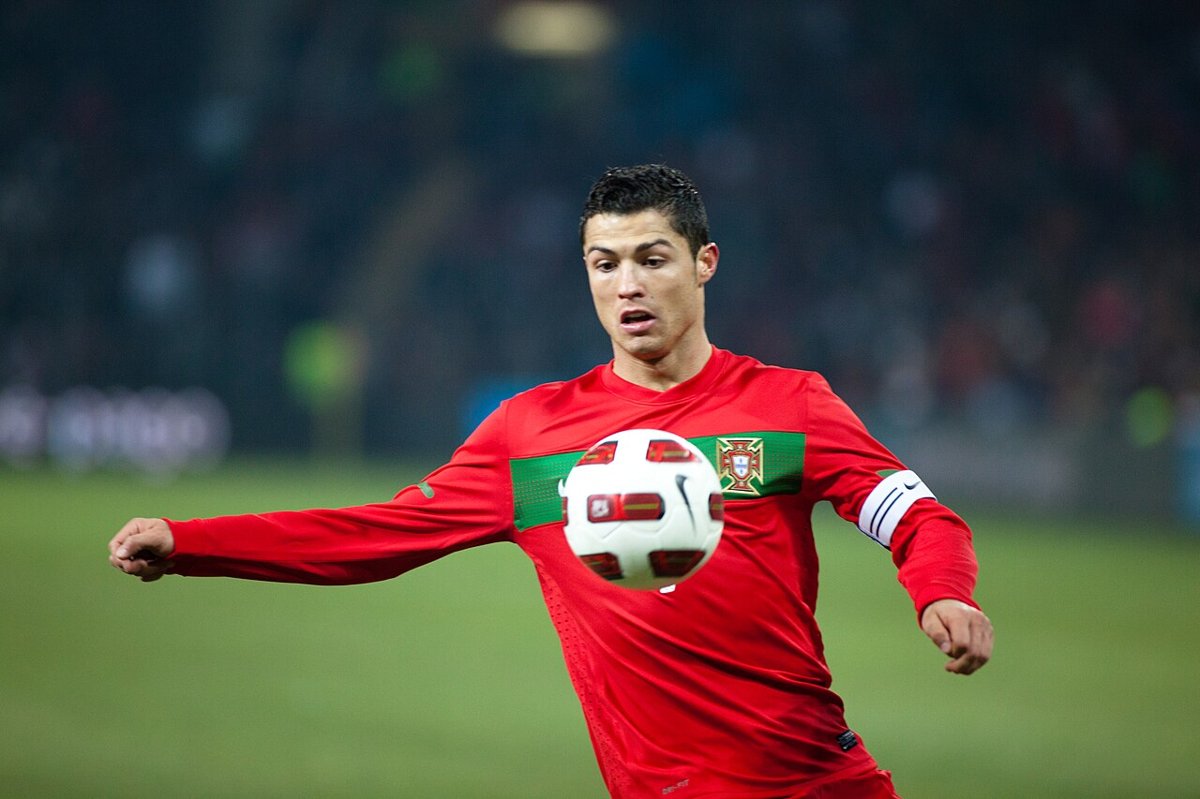
Cristiano Ronaldo has been handed a 30-day suspension after walking out on the Portugal national team, in a disciplinary episode that pits the country’s greatest player against the collective discipline every squad depends on. The ban, reported in the day’s headlines, forces Portugal to plan without their captain and forces Ronaldo into an unfamiliar position: watching his national team from outside it. For readers of flymenews.com, the story is about far more than one month’s fixtures.
A Walkout With Consequences
Cristiano Ronaldo has built a two-decade career on the refusal to accept any script but his own, and it has mostly served him and his teams extraordinarily well. Walking out on Portugal, however, crosses a line that even iconic status does not erase, and a 30-day suspension is the federation’s way of saying so. The punishment lands as both discipline and message: no player, not even the country’s record scorer and global face, is bigger than the shirt he walked away from.
Details of the departure matter less than its symbolism. National teams run on collective discipline precisely because they gather briefly and must cohere fast; a captain or senior figure exiting the group, whatever the provocation, hands every younger player a lesson the coaching staff cannot afford to let stand. A month-long ban is long enough to hurt, short enough to leave the door open, which is usually the geometry federations aim for with a star they still need.
The Late-Career Pattern
There is a familiar late-career pattern in which a great player’s relationship with the institutions around him grows friction-prone: minutes managed, roles renegotiated, authority contested in ways that were unthinkable at his peak. Ronaldo’s career has brushed this pattern before at club level, and each time the resolution has depended on whether his performances still outweighed the turbulence. They usually have, which is why this story, too, will be settled on the pitch more than in any disciplinary hearing.
But international football is less forgiving of turbulence than club football. A club can wait out a storm across a 60-game season; a national team lives in short camps and binary tournaments, where one fractured camp can waste four years of building. Federations know this arithmetic, and it explains both the firmness of the sanction and the care, visible between the lines, to frame it as finite and survivable for everyone involved.
Reading the Wider Picture
Comparisons with past star-versus-country standoffs are instructive mostly for how they ended. Football history is littered with bans that dissolved quietly once results wobbled and federations rediscovered their need for the player they had punished, and with reconciliations staged through a goal, a grin and a press conference worded to let everyone climb down. Portugal’s deep squad gives its federation more leverage than most, but leverage in these disputes has a short half-life, and both sides know the calendar will argue for peace soon enough. Readers can follow continuing coverage on flymenews.com as this story develops.
What Thirty Days Actually Costs
A 30-day suspension in international football is a moving target: its real cost depends entirely on the calendar it covers. If the window swallows qualifiers or tournament preparation matches, Portugal must rehearse life without their most famous finisher, and Ronaldo loses rhythm, records momentum and the stage he has always treated as his birthright. If it falls across a quiet stretch, the sanction becomes more reputational than competitive, a headline rather than a handicap.
Either way, the commercial ripples are real. Ronaldo remains one of the most marketable athletes on earth, and governing bodies from FIFA down to national federations exist in permanent tension between disciplining stars and showcasing them. A ban threads that needle awkwardly: it asserts the rules while removing the product’s biggest draw, which is why such decisions are rarely as simple internally as the press release makes them sound.
Portugal’s Dressing-Room Equation
For Portugal’s coaching staff, the episode forces an unwelcome but clarifying question: how does this team function, tactically and emotionally, when Ronaldo is not its centre of gravity? Portugal’s talent pipeline is the envy of most nations, rich in forwards who play weekly at Europe’s biggest clubs. A forced month of alternatives could accelerate a transition the programme has postponed for years, or expose how much gravity the veteran still exerts on opponents’ game plans.
Senior players will be watched as closely as the suspended star. National squads fracture along exactly these seams, between those who see discipline as overdue and those who see their leader mistreated. How Portugal’s leadership group closes ranks, and what it says publicly through channels including UEFA’s competition coverage, will shape whether the story ends as a footnote or festers into a saga that follows the team into its next tournament.
What Happens Next
The immediate watchpoints are procedural and personal: whether Ronaldo or his representatives contest the suspension, what the player says in his own channels, where his voice reliably reaches hundreds of millions, and how Portugal select and set up for their next fixtures. An apology, even a carefully lawyered one, would shorten the story’s life considerably. Silence, or defiance, would extend it into the next international window and beyond.
Longer term, the episode becomes part of the permanent Ronaldo dossier, filed alongside the records and the trophies. History tends to be generous to players of his magnitude, but it keeps the walkouts too, as texture. Thirty days will pass. What Portugal and their captain decide to be to each other afterwards is the part that will actually be remembered.
Thirty days is a short sentence and a loud one. It tells Portugal’s squad that rules bind everyone, and tells Ronaldo that the team’s patience, unlike his talent, has limits. How both sides use the pause will decide whether this becomes a footnote or a fracture.
